
After all that watercolor exposé, I am sure you’re ready for something different. Well, last year I came across Michael Halbert earlier in the fall – particularly his “Scratchboard Illustration of a Skeleton for a Wine Label” video. I was immediately drawn to this technique, so I purchased a small kit from Ampersand straight away. The board in the kit is white, and I used India ink and a Faber-Castell Pitt Artist brush pen to add the black. I’d be interested to try their black boards though, for sure.
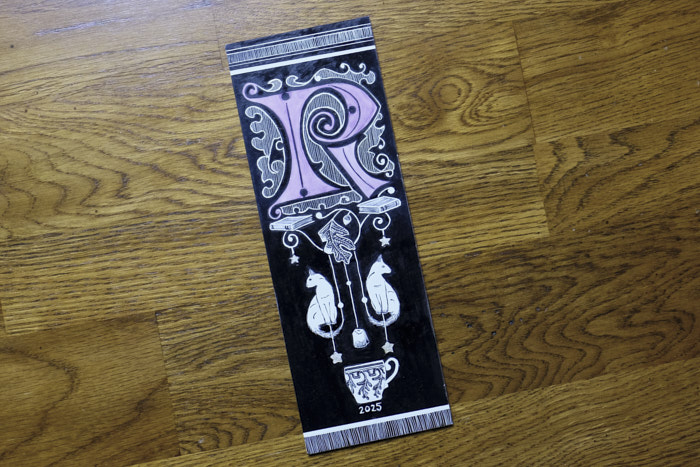
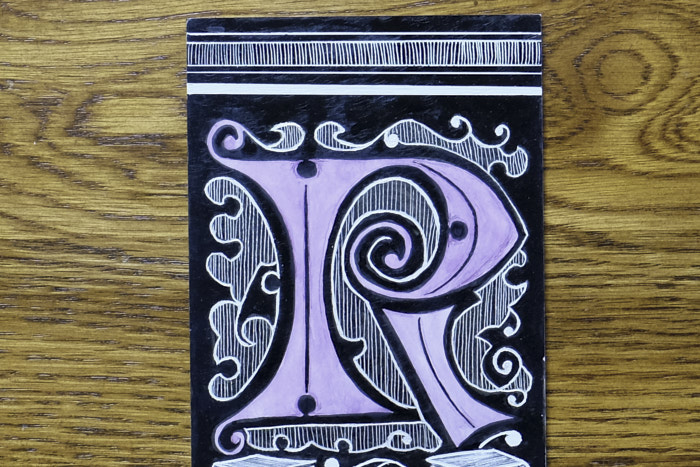
I intended to use the kit just as a test, to see how the method works. But, of course, if I were to spend any amount of time on it, I wanted a result I was at least satisfied with – not just a bunch of doodles to see how the tools worked. So I scrolled through a bunch of images I’ve saved over the years, and found this R (unfortunately, the reverse image search did not bring me to an original source.)
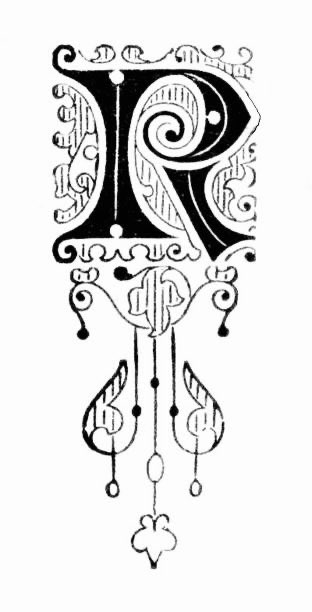
I felt it was simple enough that I could recreate it in scratchboard, while complex enough that I’d learn skills and be proud of the outcome. But, of course I couldn’t just recreate this. I had to make it my own. Enter photoshop and some ideas I had laying around in my head. Eventually, I settled on telling the story of some of my favorite things: nature, books, cats, stars, and tea.
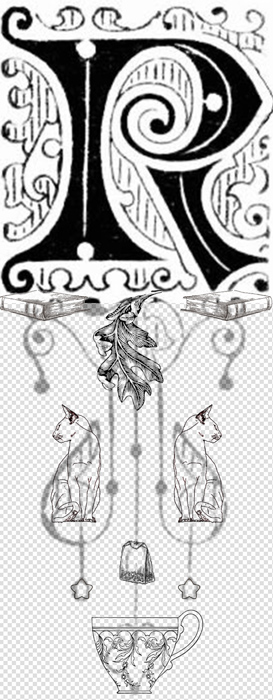
I’ll come back to the R in a moment.
I’ve been making a nature journal with my watercoloring (I’m on volume 3, but haven’t taken any photos yet to share!), and used oaks as a theme there since our yard is full of them. Thus, I began with a nice oak leaf and acorn for the central motif.
And since I’ve been practicing what I call “The 1990s Called and Wants Their Saturday Back” for over a year now (hence this post), the second thought came to me. This 90’s process (of imagining that the internet was only a small blip out of my life; which began on only Saturdays and morphed into the every day as much as possible by now!) has been fruitful in more ways than I can count. But, a major win was the amount of reading I stole back from the enshittified internet machines. Hence the two books. The books let me play with some of the other tools in the kit beyond just the main scraper one I used for most of the design.
It’s no secret I like cats, so of course they had to make an appearance. I consider myself not skilled enough to render them as I had envisioned them, but I still appreciated what I learned there. They gave me the most trouble, so it was a lot of scraping, inking, scraping, and inking to get them somewhere close.
Stars, drawn or in the night sky, are another thing I enjoy, so they easily replaced the little circles in the original artwork.
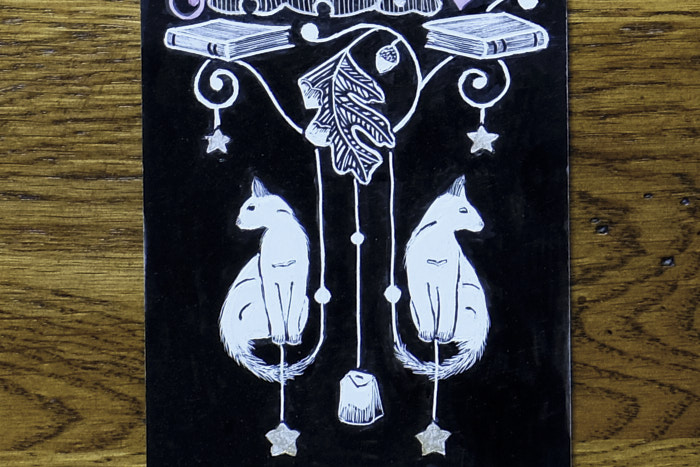
And who would I be if not with a cup of tea nearby?
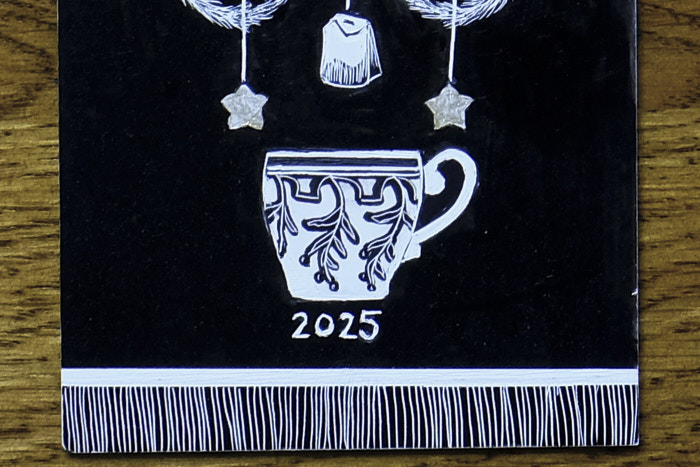
Minus the fact that my India ink is considered antique these days and has a bit of a shiny-blotchy finish, I was happy with the final result. However, this process was intended to be a learning experience more than a piece of art. So, I just had to know: would the clayboard take color? I added a small wash of watercolor for the R and found out. I don’t love it for this piece, but I learned. Yes, I could scrape it off back to white, but I considered the project had served its purpose and left it.
I discovered the clayboards are a little too pricey for me to pick up as a studied hobby right now amidst many other projects I have, but I enjoyed learning the game and will add ideas to the queue!
0 Comments