
Alright, now about that nature journal I’ve mentioned a couple of times!
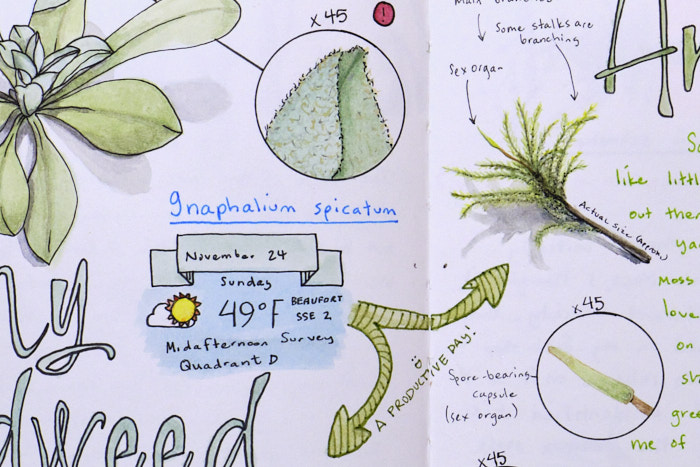
I think it ridiculous that we’ve lost touch with the ability to even name a thing found in our yards. Sure, some people don’t struggle with this, and my hats off to you rare folk out there. But most things are “grass”, “trees”, “weeds”, or “bugs” – and that’s that. Charles Darwin had it right – go out and learn! I have always wanted to be able to identify things on my little slice of Earth, but even if I look it up with an app or something, it doesn’t stick in memory. I needed a better way to really make it stick.
I also have always enjoyed scientific illustration. And, though I have not once enjoyed watercoloring, I do really appreciate the art form. So, one day after talking about how I’d like to properly learn scientific illustration and also learn to identify all the things in my yard, a friend at work tipped me off to John Muir Laws, a huge proponent of nature journaling. He describes it nicely:
A world of infinite beauty and discovery waits just beyond the point where we usually stop paying attention. Nature offers us peace and a rich and meaningful place to learn. No computer program can replicate the richness of seeing a flower up close, the intrigue of geeking out with bugs, or the calm of laying on your back and watching clouds. The key to developing a closer connection with nature is deliberately enhancing your powers of observation and wonder. Learn how the methods of a field naturalist will help you notice more, remember what you discovered, and be actively curious. A nature journal is a lens that focuses our attention and crystalizes our observations, thoughts, and experiences. The system is creative, rigorous, and playful, easy to begin and learn, and will grow and mature over a lifetime.
I decided to be all in at the start because this really sounded right up my alley. When I began, my sewing things were all packed away and those types of projects need space and orderliness that I couldn’t (can’t) access right then as we work on a major home renovation. But a nature journal kit is tiny and would be used outdoors most of the time. Since I never liked watercoloring before, I decided it very possibly was about the materials I had on hand, so I ordered John’s sketchbook and would begin with some old paints I acquired from my brother’s early college years. (Spoiler alert, I’m actually on my third volume!)
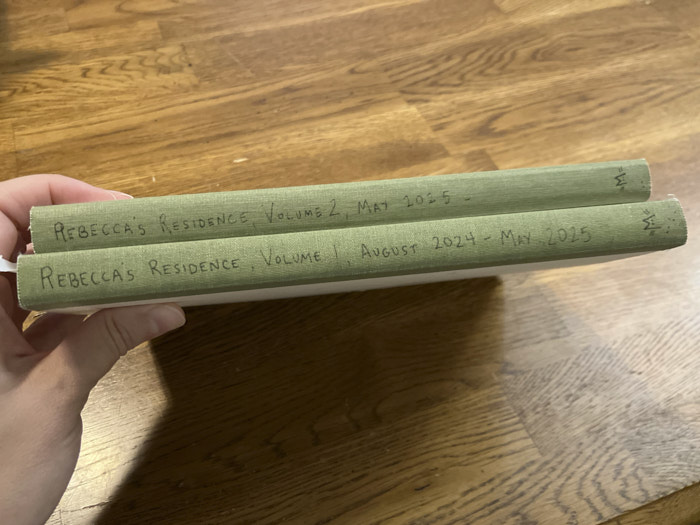
I spent a few weeks researching visual ideas, ordering some books (John’s Nature Drawing and Journaling and also Roseann Hanson’s Master of Field Arts and Nature Journaling for Wildlife), and getting myself motivated to take the plunge. I used some mixed media paper to doodle with the paints and get a feel for the whole thing. And then I made an official effort to begin on August 1st, 2024 (which happened to coincide with the day my new niece was born, but that’s a happy coincidence).
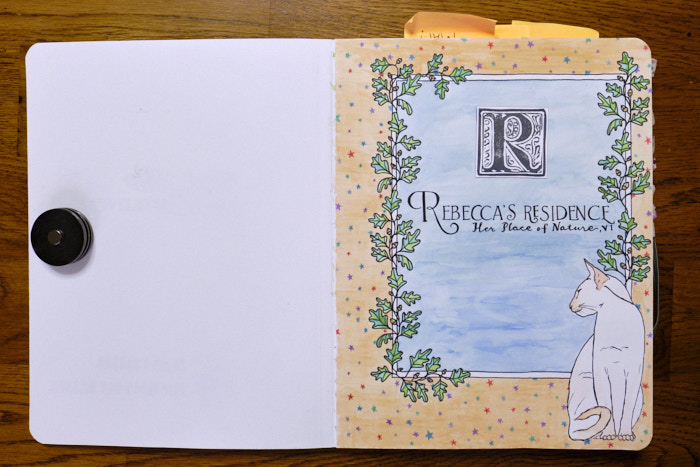
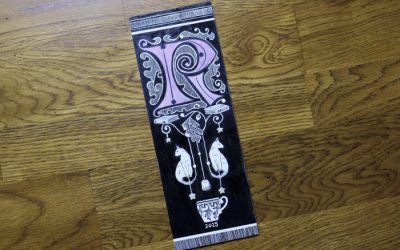
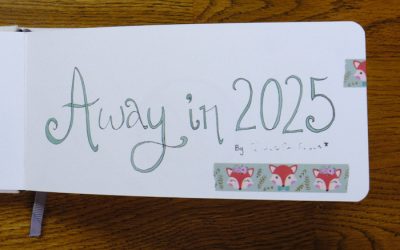
And I wanted to officially start a “book”, because I had been inspired by Edith Holden‘s “Nature Notes from 1906” (I have The Country Diary of an Edwardian Lady), so I designed a title page and organized my journal as one. It’s just for me – no intent to publish or anything – but how fun to think of it as a tried and true book, eh? So I spent some time in photoshop deciding what the title page would look like (white oak leaves, a cat, stars, the colors I love, medieval illuminated manuscript vibes, a bit art deco to boot, and a nod to Edith Holden).
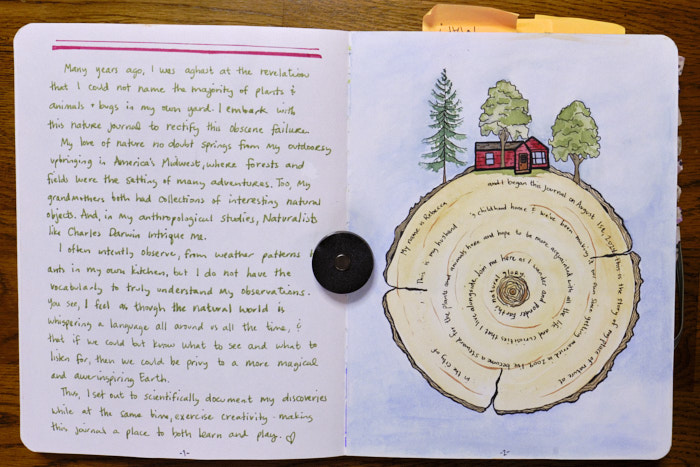
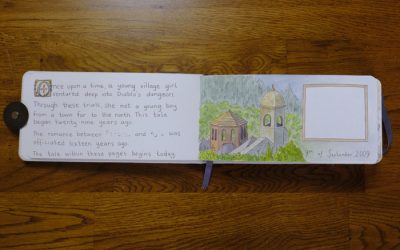
I also thought about other pages I would want to include that wasn’t strictly related to the nature journal aspect itself, like a note about the book.
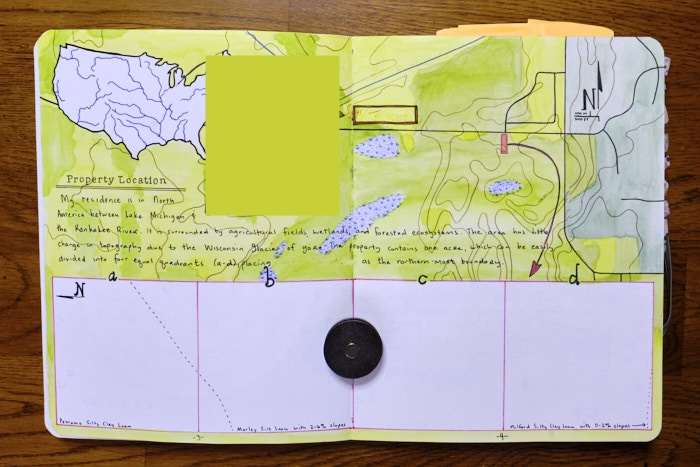
The first volume includes a topographic map that I’ve fuzzied out for privacy but you can see it begins with the nation and zeros in to my plot of land. This page is unfinished currently (big blank rectangle at the bottom), as I intend to include a map of our yard but haven’t yet done so. I know, this was years ago now, but that’s the beauty of taking things slow and as they come, what can I say?
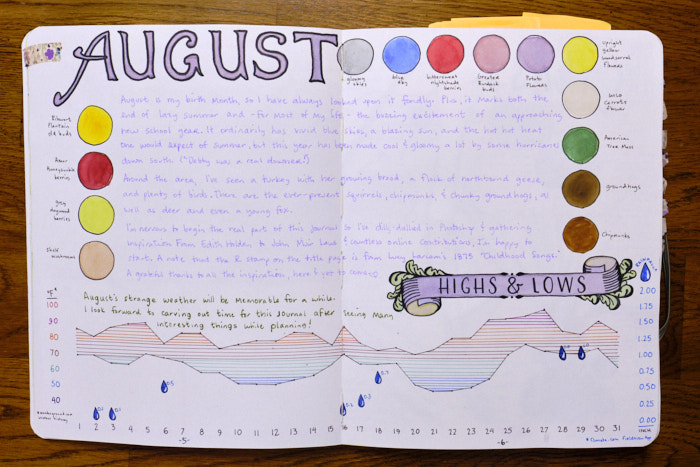
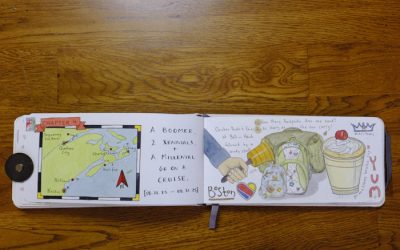
In photoshop, I also worked out what other things I wanted to do, which wound up including a monthly summary that would also capture color swatches that I’d seen that month as well as basic weather information.
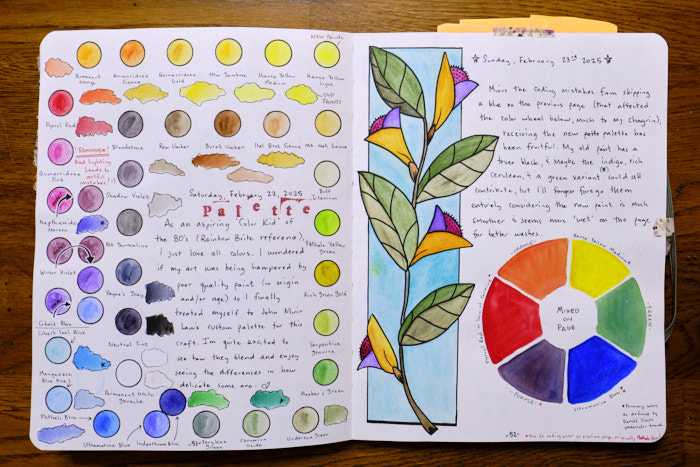
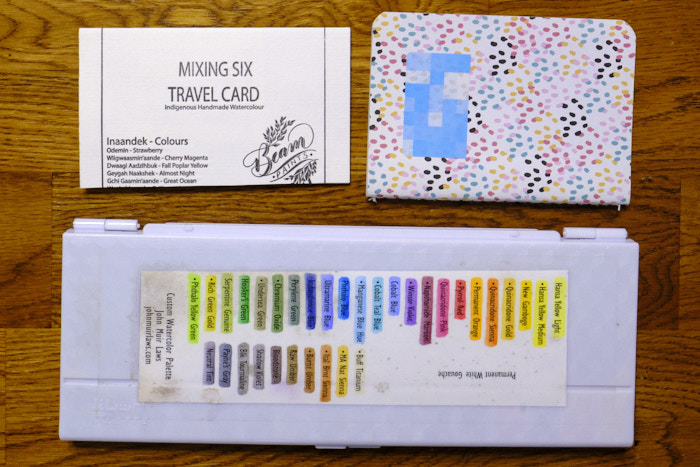
I did scoop up the blue pencil and waterbrushes John mentions a lot in his videos. Total. Game. Changers. No more smeared graphite, no more too-many-times-erased and rough paper. No more inconsistent wetness in paints. Once I realized I was into it, I splurged on John’s palette, too, and then I devoted a spread exploring those colors. This also shows that my book isn’t meant to be a finished piece of art – it is a place I explore and mistakes might bring frustration, but they don’t stop me from continuing on. I understand watercoloring more now, and rarely use the wicking of the waterbrush anymore, but I couldn’t have gotten here without being able to control that variable in the beginning. I also learned that I am a hot-press paper kind of girl (rather than the bumpy cold press). And I paint “dry” rather than those lovely washes of wet color that I admire so much. (I’m doubtful that style will ever be in my future, but never say never.)
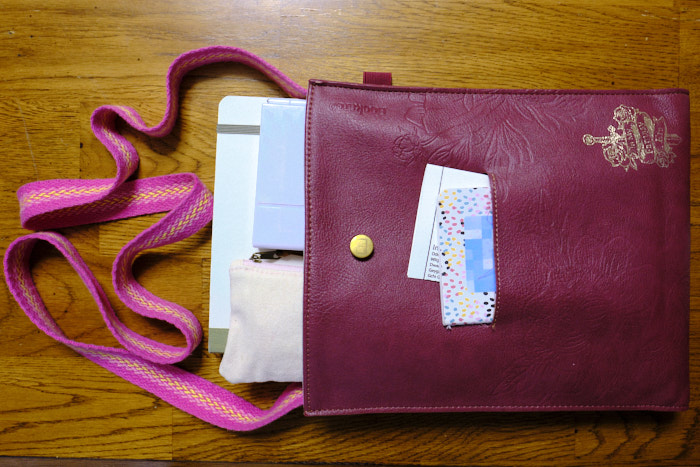
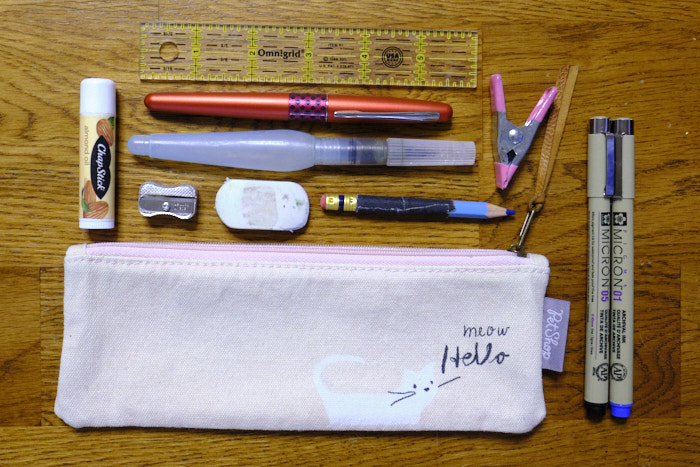
I began with black microns and colorful non-water-proof markers, and later switched to a fountain pen with permanent brown ink. I use to carry more in my kit but I’ve narrowed it down to very few items. I carry a small zipper pencil bag (brush, pen, and pencil of course, along with an eraser, sharpener, ruler, and clip for windy days), the palette, and the journal in a Bookaroo pouch that I sewed a shoulder strap to. I love it – sleek and lightweight. In its front pocket, I have a tiny notebook if I need to jot anything down, and some watercolors on a notecard. I also keep two microns on hand for the monthly summaries: a 05 black for most of the outlining, and a 01 blue for recording rain and snow. And a trusty chapstick, as I am fairly addicted. (I do miss Avon Care Deeply and am out hunting for a good replacement, if you know any!)
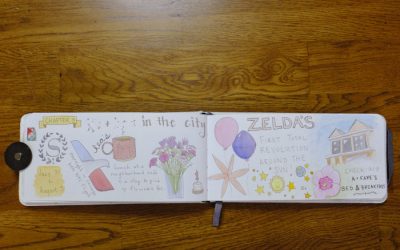
My first volume found me a little too OCD about the desire for neatness and standardization. I boxed myself in, having chosen to trace fonts and align everything just so (and often making mistakes that added to the frustrations). I felt I couldn’t change it up and try something new until I got to the next volume – which truthfully I had no idea I would enjoy this hobby so much to ever even fill up a single one!
Here is a taste of where I began, trying to be quite scientific with all the notations.
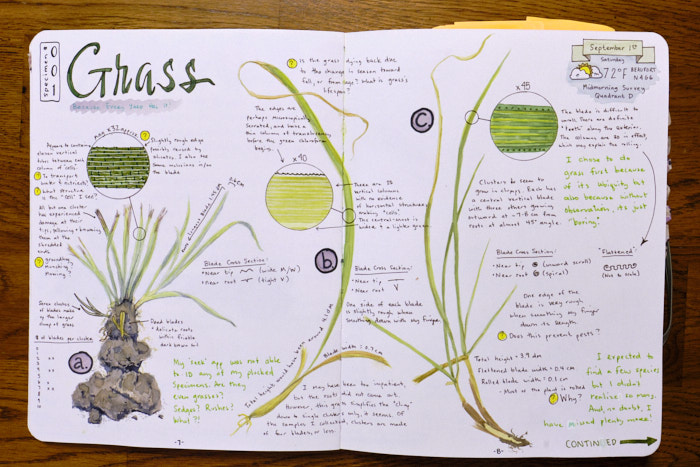
And wanting to capture quantitative science and more scales.
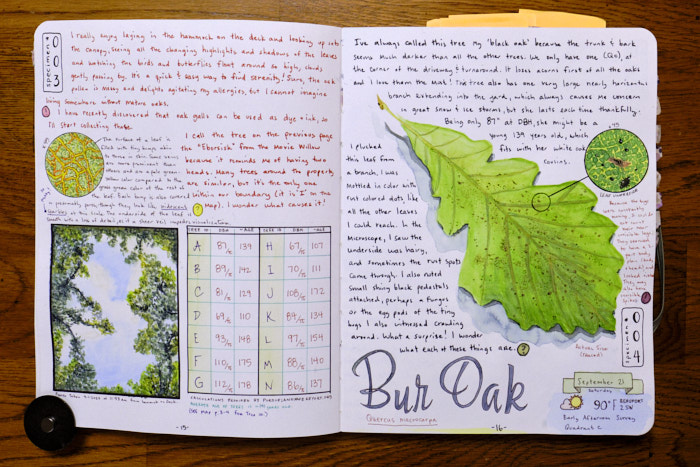
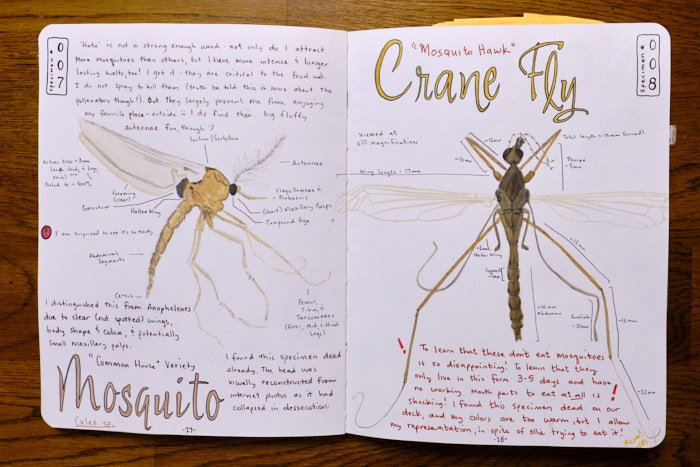
I found some dead bugs, so I capitalized on them with my microscope.
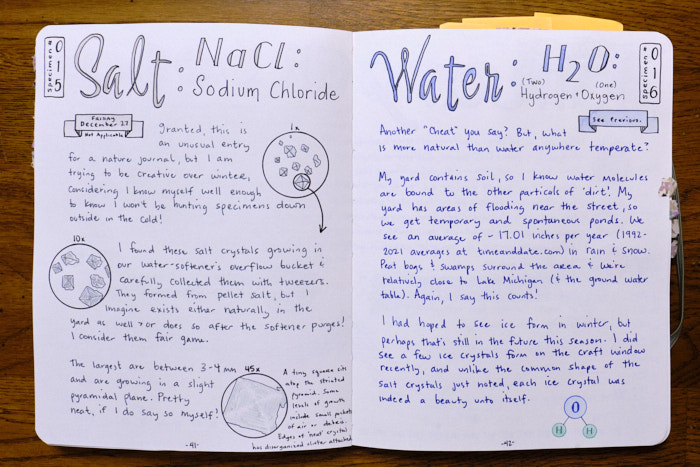
I knew winter wouldn’t find me outside, so I got creative with my utility closet and water softener.
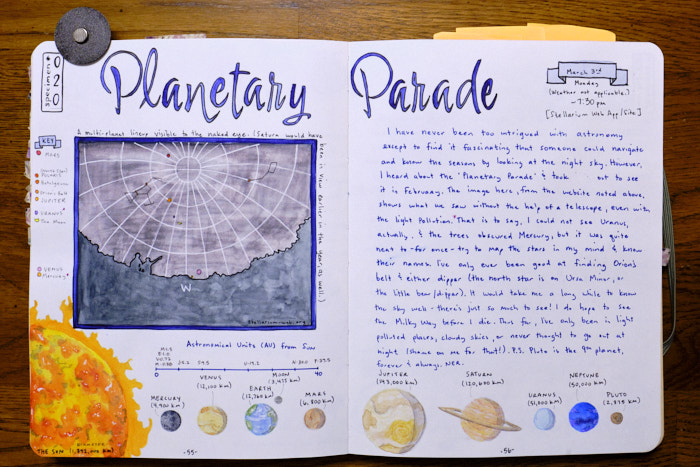
I studied the night’s sky during the Planetary Parade.
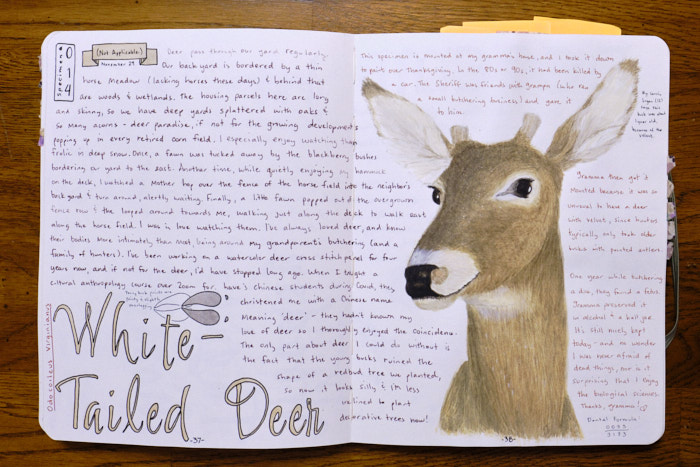
I struggled with the fur of a deer.
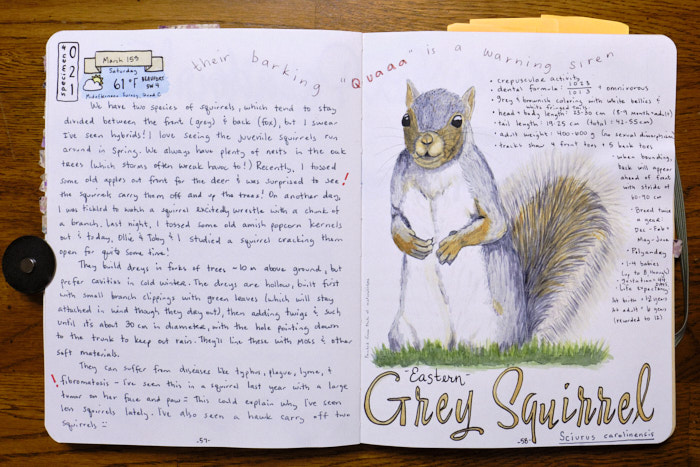
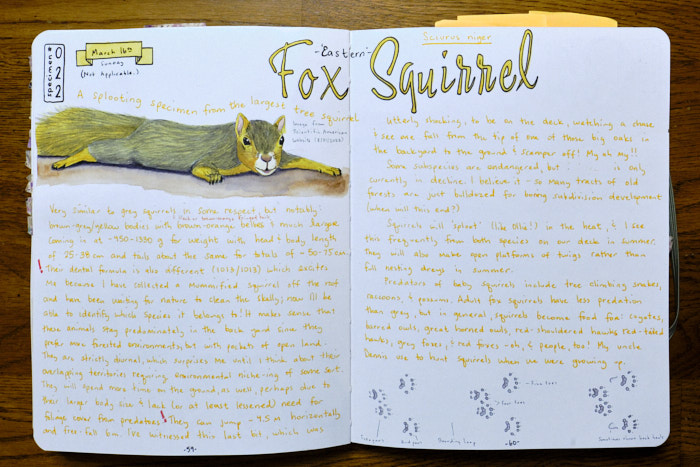
And squirrels.
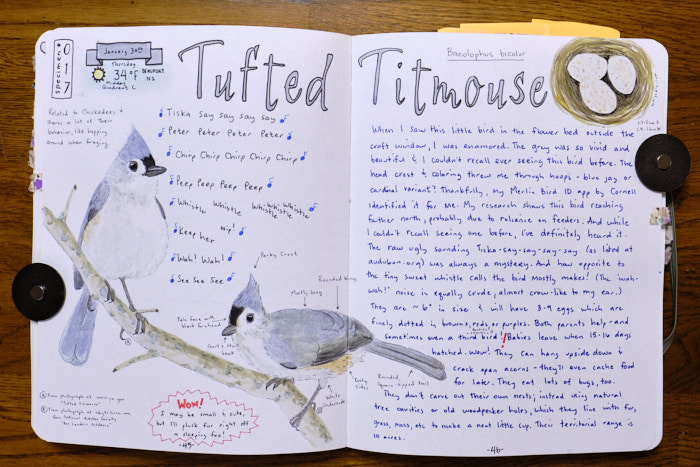
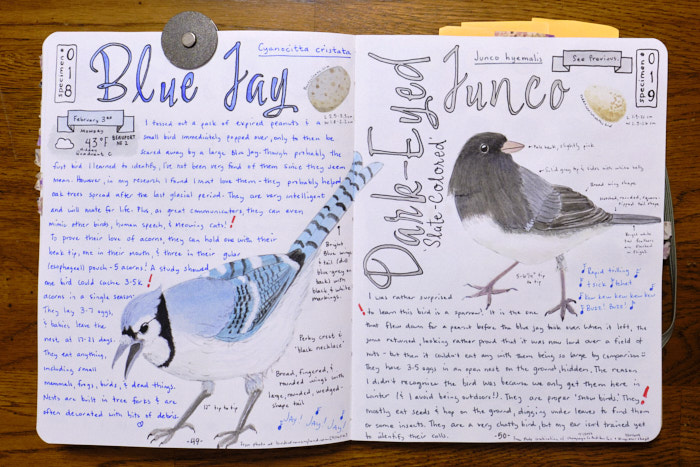
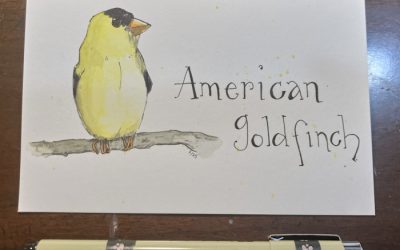
I discovered a lovely little bird and recorded some others.
I even learned how to paint on tonal paper.
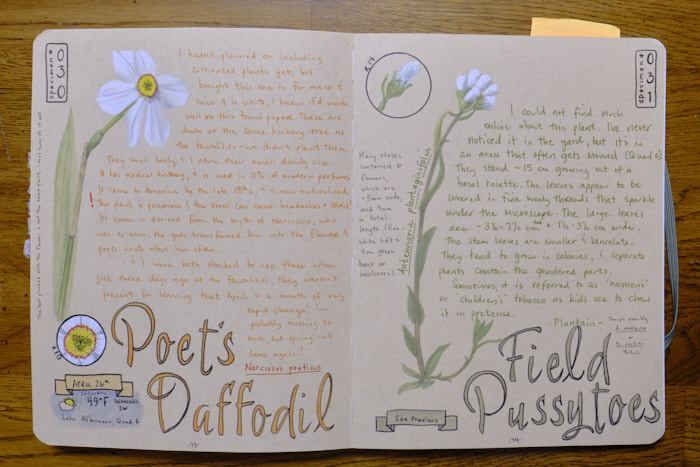
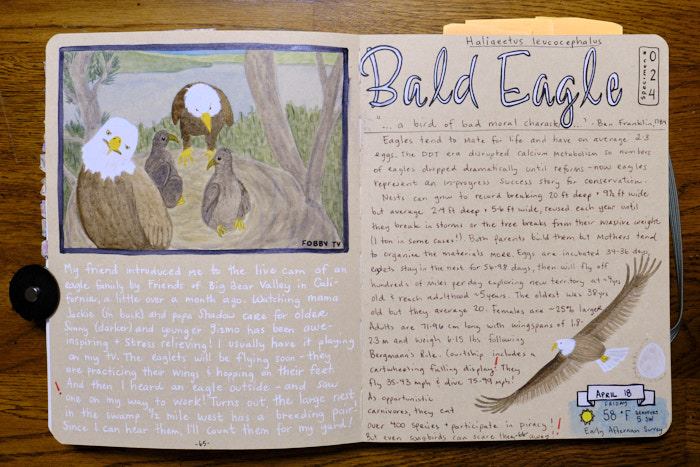
I also was excited to include eagles! Real life bald eagles! Here!
At the time of this journal, I was using iNaturalist‘s Seek app and the Cornell Lab’s Merlin app to get started, and then research at Wikipedia, or some local native plant and animal database style websites, or one of the many books I’ve been collecting for years. I use to strictly rely on the apps until I realized that I had been misled at times. I especially like the ID keys Michael Kuo has put together for mushrooms. Wow. For weather, it’s Climate.com‘s FieldView for rain totals specific to my yard. With a free account, they use to also provide me the specific high and low to my property but they’ve enshittified themselves (see this or Cory Doctorow‘s book of the same name). Because they changed their free access, I’m stuck with NOAA’s Past Weather feature for highs and lows which would be fine except the closest station is 20 miles away so not exactly accurate for me. Plus, it is volunteer based, and I’ve found that sometimes there just isn’t any information recorded. Cool.
Being that I’m on volume three, having changed some things up yet a bit more, and realizing that the scientific illustration aspect, or at least the technical recording, is less attractive to me than the painting and neat bits of information I may learn, or the perception of touch and smell, well… needless to say there are over 100 specimens captured and over a year’s worth of monthly summaries, so rather than show everything in this post, I’ll simply point you to a new gallery I created for those interested titled 2026 Nature Journal v1 (I’ll get to the others later). I fuzzied out things that I’d rather keep off the interwebz, but you’ll get the gist regardless.
Now, long time readers may say “wait, I thought you hated watercoloring?” and to them I would simply say “that’s why I learned to say never say never!” 😉
Enjoy!
0 Comments